



Destinations
Castle Combe vs Bibury: Which Cotswolds Village Is Worth a Day Trip?
September 12, 2026
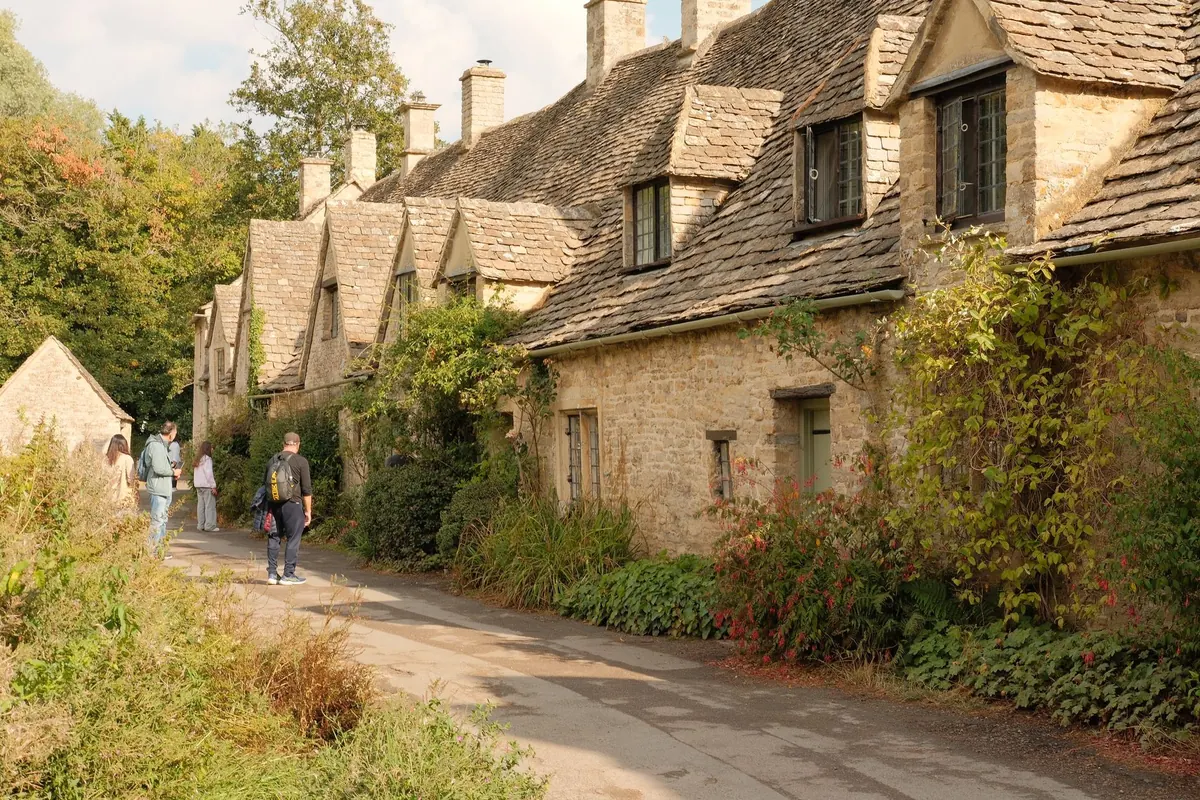
Castle Combe and Bibury turn up in every Cotswolds conversation, and in photographs they look almost interchangeable: honey-coloured stone, a shallow river, a low bridge, a pub with a hanging basket. In person they behave quite differently. Castle Combe is essentially one street, and you can see it properly in two hours. Bibury has more to walk around — a river, a trout farm, and the most photographed terrace of cottages in England. Transport, crowds and food all play out differently, so here's what to weigh up before you commit.
The quick verdict
Choose Castle Combe if you're based in Bath, Bristol or Chippenham, want an easy half-day out, and don't mind that the village is very small. It suits a slow lunch and a short wander.
Choose Bibury if you're coming from Cirencester, Burford, Oxford or London, want a bit more ground to cover, and would rather build the day around one spectacular row of cottages.
They're roughly 30 miles apart, so doing both in one day by car is possible but rushed — and you'd spend much of it driving. Pick one and give it a proper morning.
Getting there without a car
This is where the two villages separate sharply, and it's worth being honest about it.
Castle Combe
There's no station in the village. The nearest is Chippenham, on the Great Western main line, with direct trains from London Paddington, Bath and Bristol Temple Meads. From there it's a short taxi ride, roughly 15 minutes. Buses do link Chippenham with the village, but they're infrequent and timetables change, so check before building a plan around one. If you drive, the car park sits at the top of the village, leaving a short downhill walk to the main street. There's very little parking on the street itself, and none of it is yours to take.
Bibury
Bibury sits on the A433 between Cirencester and Burford. The nearest station is Kemble, outside Cirencester, from where it's a taxi ride of about 20 to 25 minutes. Buses run along the A433, but they're limited and often not timed for a leisurely visit — you may end up planning the day around the timetable rather than the other way round. By car it's straightforward, with a village car park near the river and the trout farm.
If you're relying on public transport and want the least hassle, Castle Combe via Chippenham wins. A taxi each way is predictable and quick.
Crowds, and how to work around them
Both villages are famous, and both get coach traffic. The difference is in the shape of the day. Castle Combe's visitors funnel into one narrow street, so it can feel busy even with modest numbers. Bibury's centre of gravity is Arlington Row, and because it's a single viewpoint, groups bunch up there in a way that's easy to spot from a distance.
The worst window in either village is roughly late morning to mid-afternoon in summer, when coaches and day-trippers overlap. Practical fixes that genuinely work:
- Arrive before 10am, or come after 4pm. The light is better then too.
- Visit on a weekday outside school holidays if you can.
- May, June, September and October are far kinder than July and August.
- In Bibury, walk past Arlington Row first and come back to it — the crowd thins within twenty minutes.
- In Castle Combe, head down to the bridge and the church end rather than lingering at the top of the street.
Remember these are working villages, not sets. Keep gateways and doorways clear, stay out of gardens and private drives, and don't fly a drone over people's homes.
Photo spots worth the stop
Castle Combe: the bridge over the By Brook at the bottom of the village, the Market Cross, the view back up the Street from the bridge, and the churchyard above the river. The village has appeared on screen more than once, which is why parts of it look familiar even on a first visit. Early morning mist on the water is the shot most people are chasing, and it does happen in autumn.
Bibury: Arlington Row from the footbridge, the weavers' cottages reflected in the River Coln, Rack Isle opposite — a National Trust wetland area once used for drying wool — and the wider sweep of the valley from the road above the village. Bibury is routinely called the prettiest village in England; whether you agree, that footbridge view is why the claim keeps being repeated.
Food and drink
Both villages are small and food options are limited. That's fine, but plan for it. Castle Combe has a pub in the village and a hotel restaurant at the top end; the pub fills quickly at lunch, especially at weekends, so book if you want a table. Bibury has a hotel with a bar and brasserie, a pub a short walk out of the centre, and a café at the trout farm — useful for a quick lunch or an ice cream with children in tow.
- Book anywhere you actually want to eat, particularly for Sunday lunch.
- Carry water and a snack. If you miss a table, the next option may be a drive away.
- Check opening days before travelling; small village kitchens keep short hours and close on quiet days.
- If you want a wider choice, Cirencester for Bibury and Bath or Chippenham for Castle Combe are where the proper restaurants are.
Making the day work
If you're pairing your village with something else, the geography decides it. Castle Combe slots neatly into a day with Bath, Lacock or Chippenham. Bibury pairs well with Cirencester, Burford, or a longer drive through the Coln valley.
Whichever you pick, treat it as a half-day rather than a full one. Arrive early, park properly, and leave time to sit somewhere with a cup of tea and no camera in your hand. That's usually the part people remember.
Photo: İrem 🎈 / Pexels
Related posts
More stories you’ll love reading