


Travel Tips
How to Plan a Three-Day Trip to the Grand Canyon South Rim Without a Car
September 11, 2026
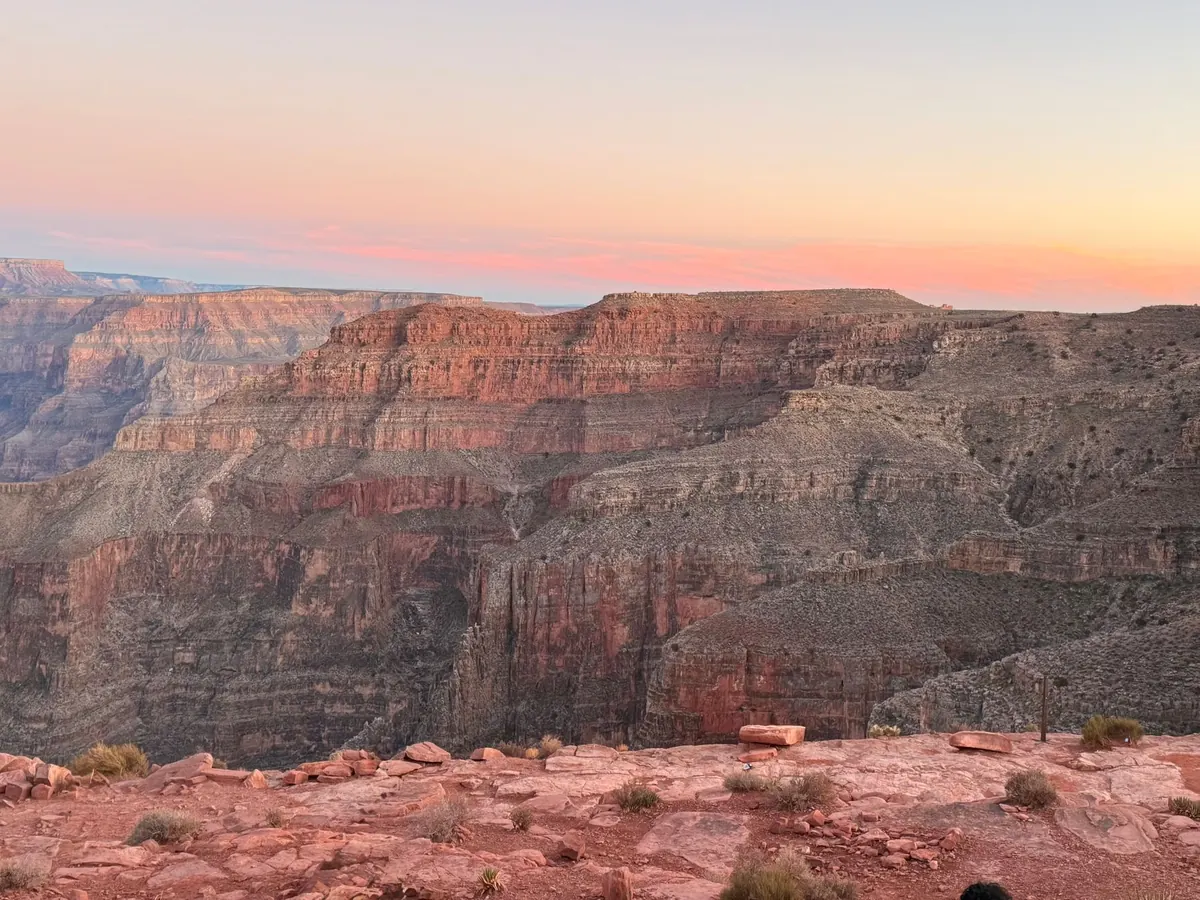
The South Rim is one of the few headline American landscapes that works genuinely well without a car. Grand Canyon Village is compact, the Rim Trail walks you between most viewpoints, and a free shuttle network fills in the gaps. You can fly into Phoenix or Las Vegas, reach Flagstaff or Williams by coach or train, and arrive at the canyon by shuttle or historic railway.
Three days is a sensible first visit. Get the transport and the lodging right, and the rest of the trip takes care of itself.
Getting there without a car
Book the long-distance legs before you book anything else, because they set the shape of your trip. From the UK, the usual route is a flight to Phoenix Sky Harbor or Las Vegas, then a shared shuttle or coach to Flagstaff, Williams or Tusayan, the gateway town just outside the south entrance. Several companies run these services, but schedules change with the season, so confirm timings for your dates rather than assuming a daily departure.
Rail options
Amtrak's Southwest Chief stops at both Flagstaff and Williams, which makes a rail-based trip from Chicago or Los Angeles surprisingly easy to slot in. From Williams, the Grand Canyon Railway runs a heritage train up to the canyon, arriving at a depot beside Maswik Lodge in Grand Canyon Village. It takes roughly two and a quarter hours, and it drops you inside the park with no transfer needed. Seats sell out in peak season.
Arriving at the rim
If you come in by shuttle from Tusayan, you'll be dropped near the visitor centre or in the village, depending on the service. Make sure you know which stop is closest to your accommodation before you travel, and check the last departure of the day if you intend to eat dinner outside the park.
Where to stay
- Inside the park: El Tovar, Bright Angel Lodge, Kachina and Thunderbird Lodges, Maswik Lodge and Yavapai Lodge are all in or near the village. Everything is walkable or shuttle-served, and staying here saves the most time.
- Tusayan: a cluster of hotels a short drive south of the entrance. Cheaper in some seasons, but you depend on the seasonal shuttle link or a pre-booked transfer.
- Camping: Mather Campground sits in the village and is on the shuttle route. Trailer Village is nearby, and Desert View Campground is seasonal.
- Phantom Ranch: the bunkhouse at the bottom of the canyon is allocated by lottery and is not a realistic add-on to a first three-day trip.
Rooms inside the park are limited and summer dates often sell out many months ahead. Book accommodation first, then flights, and be prepared to be flexible about which lodge you end up in.
Permits, fees and the rules that matter
There is an entrance fee, charged per vehicle or per person if you arrive on foot, by bicycle or by shuttle, so check the current rate before you travel. Day hiking into the canyon on the Bright Angel or South Kaibab trails needs no permit. Sleeping below the rim does: you'll need a backcountry permit from the Backcountry Information Center, and Phantom Ranch has its own separate lottery.
One piece of advice worth repeating: do not try to hike to the river and back in a day. The descent is easy, the climb out is not, and the heat below the rim is far greater than on it. Turn around at a resthouse and enjoy the walk back up. If you are hiking, check that your travel insurance covers the activity.
Note too that Desert View Drive, with the watchtower and the eastern viewpoints, is not served by the shuttle. Reaching it without a car means joining a guided tour or a commercial transfer.
Understanding the shuttle system
- Village Route (Blue): runs year-round, looping the visitor centre, Market Plaza, the train depot, the lodges and the trailheads. Your workhorse.
- Kaibab Rim Route (Orange): links the visitor centre with Mather Point, Yavapai Geology Museum and the South Kaibab Trailhead.
- Hermits Rest Route (Red): heads west along Hermit Road to Hopi, Mohave and Pima Points. For most of the year this road is closed to private vehicles, which makes it a rare case where travelling without a car is a straight advantage.
- Tusayan Route (Purple): a seasonal link from Tusayan into the park.
- Hikers' Express: an early-morning run to the South Kaibab Trailhead for sunrise starters, operating seasonally.
Buses are free and run frequently during daylight, but they stop earlier than you might expect. Check the last departure times for the route you're on, particularly if you're chasing sunset at Hopi Point.
A realistic three-day itinerary
Day one: arrive and orient
Drop your bags, walk to Mather Point for a first view, then spend an hour in the visitor centre to get your bearings. Take the blue route to the village late afternoon, eat early, and catch sunset from Yavapai Point or the rim outside Bright Angel Lodge.
Day two: sunrise and Hermit Road
Start with sunrise at Mather Point, then walk part of the Rim Trail towards the village. After lunch, ride the red route west and hop off at Hopi, Mohave and Pima Points, walking the short connecting sections between them. Finish with sunset at Hopi Point, then take the shuttle back for dinner.
Day three: a canyon hike and the Trail of Time
Take the Hikers' Express to the South Kaibab Trailhead and walk down to Ooh Aah Point, roughly three kilometres return, with no water on the trail. Afterwards, ride the orange route to Yavapai Geology Museum and follow the Trail of Time back towards the village, which explains the canyon's geology as you walk. Depart mid-afternoon.
Practical details for a car-free visit
Pack layers. The rim sits above 2,000 metres and the temperature swings sharply between shade, sun and evening. Bring a refillable bottle and top it up at village water stations; South Kaibab has none. Summer afternoons can bring sudden thunderstorms, and winter paths ice over, so traction devices are worth carrying between roughly November and March.
Ride-hailing is unreliable and mobile coverage is patchy, so plan each day around the shuttle timetable rather than hoping for a lift. The village has a general store, a deli and cafeterias for picnic supplies, while the smarter dining rooms need booking. Finally, build a buffer into your departure day: shuttles to Flagstaff and Williams are infrequent, and missing one can mean an expensive problem.
Photo: Roselle Miguel / Pexels
Related posts
More stories you’ll love reading